
Summer 2026 Week 15 Newsletter
Howdy Folks,
Reminder about two on farm events happening yet this season, on Holiday Monday’s; Labor Day, September 7th 2-6pm & Native Peoples Day/ Columbus Day, October 12th 2-6pm. Both events will be potlucks and have a walking farm tour. If you want to attend Please fill out the brief google form here, this registration gives us an idea of how many folks are coming, and we can email you a list of other things to do in the area, a link with directions, and directions on where to park once you arrive at the farm, etc.
We do encourage you to bring a water bottle and to wear appropriate footwear to walk on uneven terrain.
Well there is a lull here. There are many plants that aren’t happy about being cool and wet, and therefore aren’t supplying us with fruits of labor. Zucchini & beans are putting up the biggest protest, but tomatoes have also definitely slowed down. When we get into a rhythm of planting, weeding and harvesting with succession plantings it throws us off big time, when the weather creates an upset in our plan! It’s sort of like going to work and you drive a certain way there, but now there is a festival and the roads are blocked off. You turn around, to go another way and tons of folks are also going this way, or even this road is closed. We are turning and twisting with new duties to try to appease plants, or having to till some plantings in, or just wait and weed them as they sit pretty waiting for better weather to fruit.
Your Farmers,
Chris, Aeros, and the Who Crew
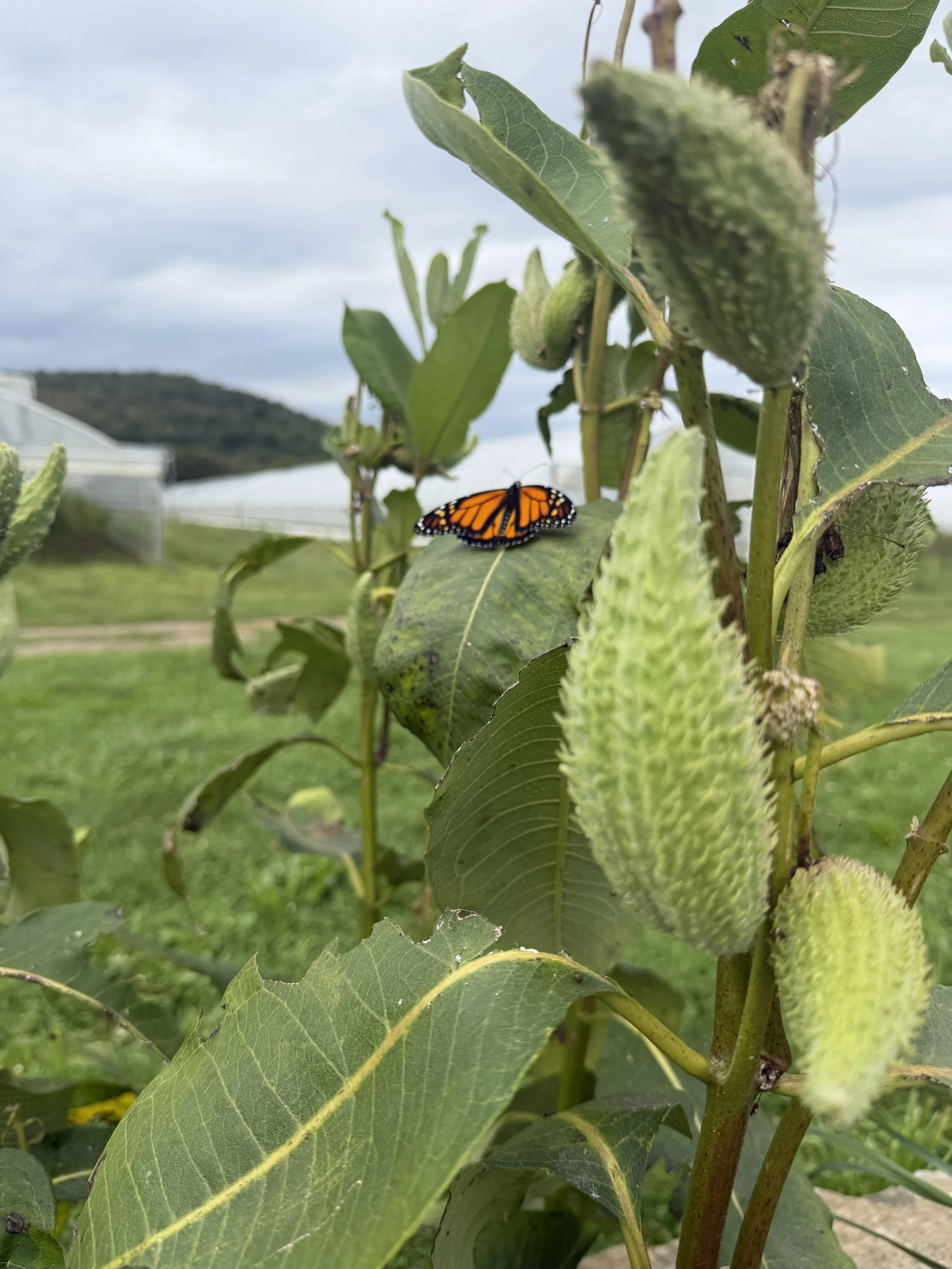
Milkweed with its most notorious fan the monarch butterfly.
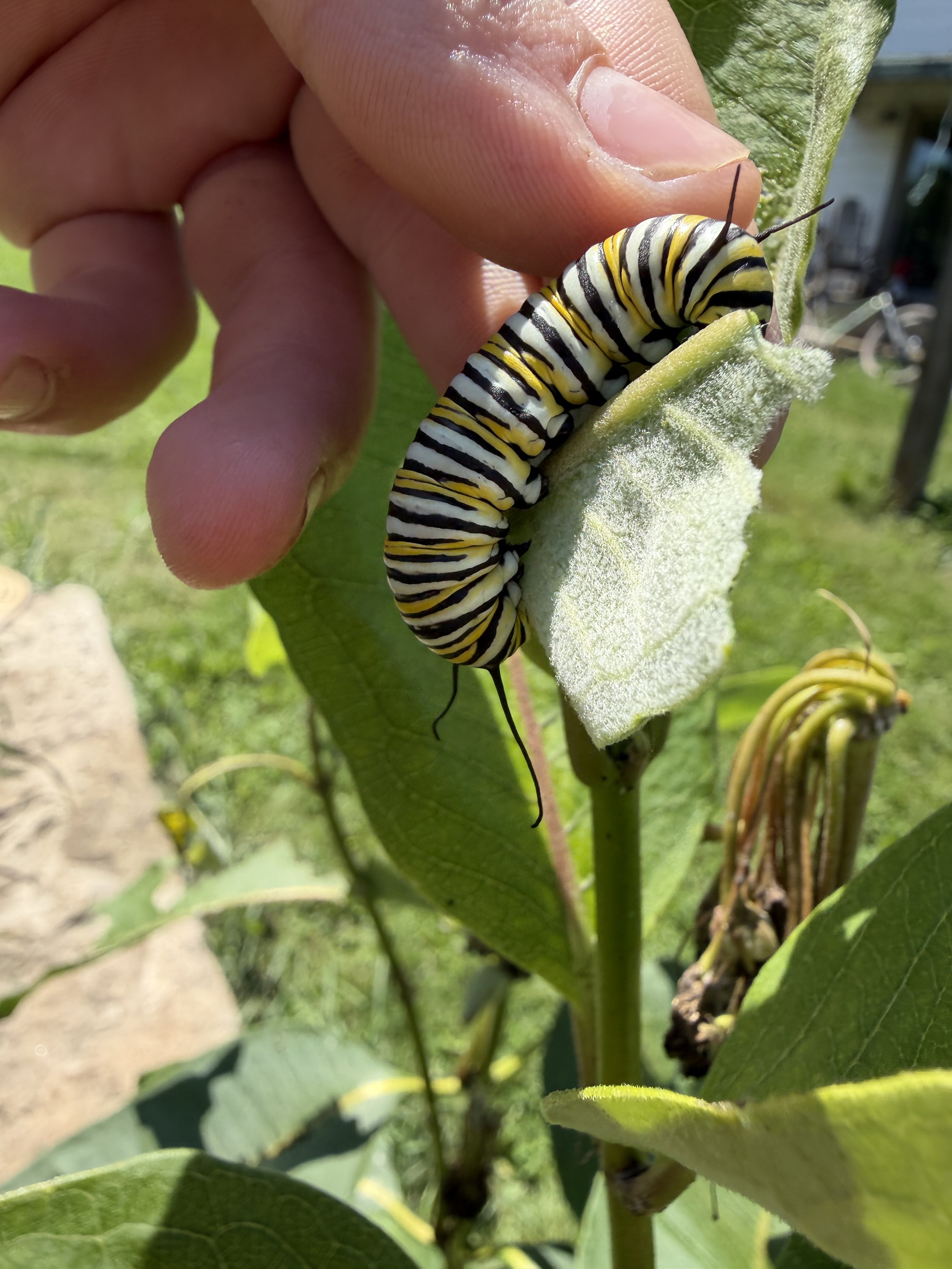
The milkweed is a host plant to the Monarch and milkweed tussock moth caterpillars. They exclusively eat Milkweed. This is one of the reasons there has been a surge in bringing this plant back to the numbers it used to be. In the 70's, 80's, and 90's Monarch butterflies were of plenty. There was a lull there for a bit in the early 2000's and still now. They are slowly making their way back as the campaign to teach children about the butterfly and bring this beautiful weed back to our backyards. It's got a wonderful seed pod that you can see above with spines on it. These spines disappear, when the seeds mature and the pod opens up and releases the seeds.
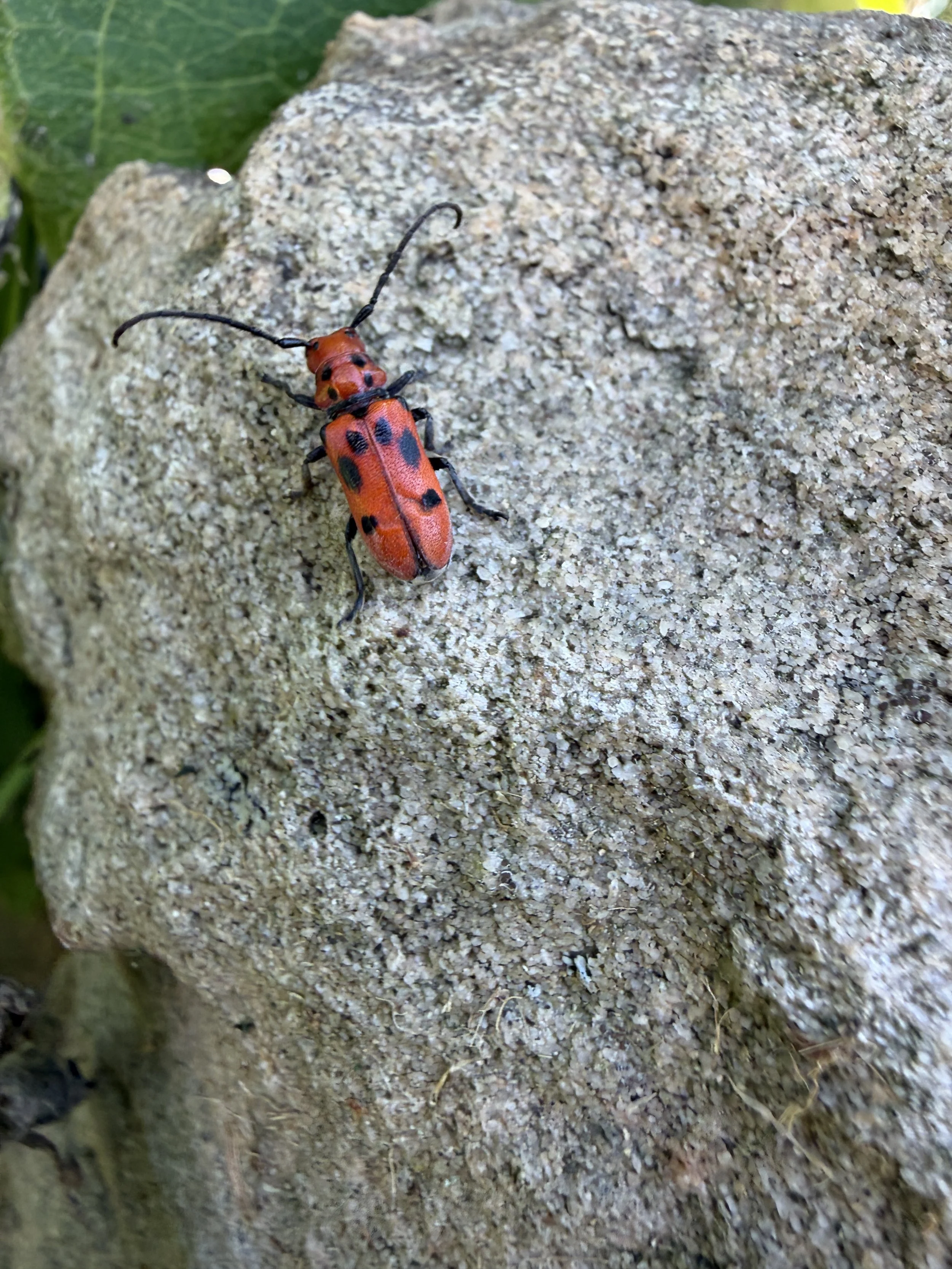
This is the red milkweed beetle. It is completely dependent on the common milkweed, Asclepias syriaca. Adult Red Milkweed beetles feed on the leaves and flowers, while their larvae burrow and feed on the roots.